
Flexible hose & connector fixes, $100–$200
The brittle connector behind the cooktop, small part, common leak source, quick fix.
Gas is the one trade where "pretty confident" is not a standard. Leaks found and repaired, cooktops and heaters connected, lines run and certified: all of it by licensed gasfitters, all of it pressure-tested before the gas goes back on in Campbelltown.
NSW reserves every gas task, down to connecting an oven, for licensed gasfitters, and the logic is unsentimental: plumbing mistakes stain ceilings, gas mistakes burn houses and poison air. The leaks we attend have a recurring origin story, and it is rarely the pipework’s idea, it is a confident DIY connection or a handyman’s thread tape, discovered later by someone’s nose.
What the licence actually buys is the ending: the whole installation held against a manometer until the needle refuses to move, every appliance checked for a clean blue burn and honest ventilation, and the work done to AS/NZS 5601, the clause your insurer reaches for when something ever goes wrong. Across Campbelltown and the Macarthur, no gas job of ours skips that ending.


The most common gas work in a newer home is not repair, it is extension, a barbecue point, an outdoor kitchen, a fire pit, a pool heater added a year or two after moving in.
Campbelltown’s rapid growth means fresh pipework carrying grout, sand and building waste that settles and blocks within the first few years.
The thing worth checking first is whether the existing supply and meter can carry the extra load. Adding appliances to a system sized exactly for the original build is how people end up with everything working individually and nothing working together.
Within the defects period, gas faults arising from installation are the builder's responsibility, and having someone else work on it can complicate that.
Campbelltown (postcode 2560) anchors Sydney’s Macarthur region, bordered by Leumeah, Bradbury, Ambarvale and Glenfield. Fast-growing new estates sit beside decades-old homes on hilly ground, so its drains face both early-life and ageing-pipe blockages, and we handle both.
We will say when a fault looks like a handover defect rather than start work on it, even though that sends you back to the builder. Documenting what we found is more useful to you than an invoice from us.
A recently built home should have a compliant gas installation and usually does. The faults we find are workmanship rather than age: a joint not fully made up, a fitting left slightly loose, an appliance commissioned in a hurry at handover.
Those show up early. If a new home has a gas smell, an appliance that will not stay alight, or a burner running yellow, it is worth a test while it is still the builder's problem.
Correct combustion is blue and steady. Yellow, lazy or lifting flames mean the air-to-gas ratio is wrong, a blocked jet, a starved supply, insufficient ventilation, or an appliance set up for a different gas type.
It is the one diagnostic anyone can do without equipment, and it is worth a look at every gas appliance in the house once a year.
Before any new appliance, the question is whether the meter and the existing runs can supply it alongside everything already connected. A system sized for a cooktop and a hot water unit will not automatically carry a pool heater as well.
Where it will not, the answer is usually an upgraded meter or a resized run rather than a smaller appliance. Establishing that first avoids buying something that can never perform properly.
The installation is isolated, brought to a set pressure, and watched on a manometer for a defined period. If the needle holds, the system is tight. If it drops, gas is escaping somewhere and the test tells us roughly how much.
It is the only way to know the condition of pipework you cannot see, and it is the step people most often want to skip. It is also the step that finds the uncapped line behind the old stove.
The brittle connector behind the cooktop, small part, common leak source, quick fix.
Leaks at threads, valves and joints: found, sealed properly, retested under pressure.
Corroded or damaged runs cut out and replaced. Concealed lines needing access run $800–$2,500.
Cooktop, oven or heater connected, tested and certified. More if a new line or bayonet has to be run to reach it.
The going Sydney range for licensed gas work in 2026, with call-out fees typically $80–$150.
Every gas job ends with a pressure test and the paperwork that proves it. Figures here are indicative of the 2026 Sydney market rather than a quote from us, you get your own number as a fixed price before any work starts.
Suspected leaks start with isolation at the meter and ventilation. Diagnosing a system still feeding its own leak is how amateurs get hurt.
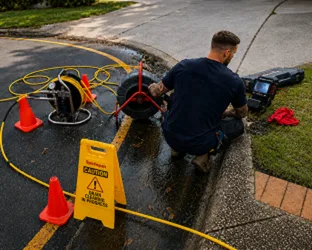
A manometer proves whether the installation loses pressure; detection fluid and instruments then walk it back to the guilty joint or run.

The failed piece is replaced with compliant material to AS/NZS 5601, one connector or a full rerun, never sealant and optimism.
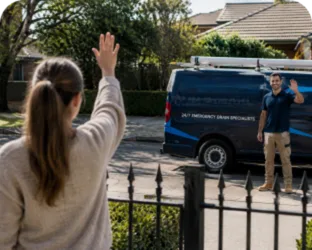
The whole installation holds on the gauge, appliances relight to clean blue flames, ventilation checks out, and the compliance record is yours.
Cooktop, heater or barbecue point: connected, tested and certified in one visit. The right way costs less than the redo.
Licensed hands, a passing pressure test, and the certificate to prove it. Smelling gas this minute? 131 909 from outside comes before this form.

Leave your details and our local Campbelltown team will call you back fast.